Where drugs go when you flush
The St. Lawrence River contains all sorts of potentially toxic pharmaceutical products, including bezafibrate, enalapril, and chemotherapy drugs methotrexate and cyclophosphamide, reported University of Montreal researchers in a new study on a novel rapid detection model they are using, in the Journal of Environmental Monitoring. []
Montreal's sewage treatment facility appeared to significantly reduce the concentrations of bezafibrate and enalapril, and may have entirely eliminated the presence of the chemo medications. "All in all, these quantities are minimal, yet we don't yet know their effects on the fauna and flora of the St. Lawrence," said environmental chemistry professor Sébastien Sauvé. "It is possible that some species are sensitive to them. Other ecotoxicological studies will be necessary. As for the chemotherapy products detected in the raw wastewater but not in the treated wastewater, one question remains: did we not detect them because the treatment process succeeded in eliminating them or because our detection method is not yet sophisticated enough to detect them?"
Sierra Club campaigner Maureen Reilly, the editor of the Sludge Watch newsletter, commented, "I think it has to be said that sewage treatment plants are 19th century technology trying to deal with 21st century pollutants."
QC, NB, NS struggle with wait times
Faced with complaints from angry patients, Michael Murphy, the health minister of New Brunswick, said he could sympathize: he was among the patients who had to be treated in the hallways of the province's overcrowded hospitals. "It's very unfortunate, but [patients] are being well cared for," he told a Moncton man who was attended to in the hall. "It's inconvenient for the staff and it doesn't lead to a very nice functioning of a hospital." The exchange came during Mr Murphy's announcement of a $73-million expansion to the Dr Georges-L. Dumont Regional Hospital, in Moncton. []
Quebec Health Minister Dr Yves Bolduc admitted that eliminating emergency-department wait times longer than 48 hours is not feasible, despite an earlier claim by his own director of emergency wait times that that would be the goal over the coming year. Instead, Dr Bolduc said, Quebec would aim to reduce the average emergency wait time from 16.7 hours to 12 hours. ADQ health critic Éric Caire pointed out that the 16.7 figure is actually higher than the average wait time was last year. [La Presse]
Halifax health officials said that the director of the Queen Elizabeth II emergency department didn't have to call a "mass casualty" "code orange" alarm last week, but Dr John Ross defended his decision, saying he had been left with no other choice but to call for immediate relief under the circumstances. The back-up at the QEII emergency department caused a "ripple effect" of delays in other clinics and hospitals in nearby towns, reported the Chronicle-Herald.
Nurses vs. physician assistants
The Registered Nurses Association of Ontario (RNAO) said that it opposes Ontario's move to increase the number of physician assistants in the province. The RNAO would prefer to see more nurse practitioners trained and hired. RNAO executive director Doris Grinspun said allowing physician assistants to do surgeries may be dangerous. "I would say to my family, friends, colleagues, to the public: don't let them touch you."
Offshoring your MRIs
An unnamed Ontario clinic is outsourcing its radiology consults to Telediagnosys, in Pune, India, reported the National Post. "Their earlier radiologist used to take at least 48 hours to give the reports and charged more than us," said Telediagnosys chief operating officer Dr Ashish Dhawad. Outsourcing medical care overseas, the article said, raises serious issues about jurisdictional oversight and liability.
The newspaper's editorial board chimed in with its opinion: in short, don't get all worked up about this. "We need to stop worrying about such tangential issues as whether our blood tests are being read in Mumbai or Medicine Hat, and start looking for solutions — private as well as public — that will give the greatest number of Canadians the best care as quickly as possible."
Meanwhile, in India, the minister for overseas Indian affairs said that the government is considering granting permission to Indian physicians who practise overseas to return to India with a license to practise. The Canadian Association of Physicians of Indian Heritage claimed that one in 10 doctors in Canada and the United States are of Indian-subcontinent origin. The government may provide "assistance" -- presumably financial incentives -- to lure doctors back to India.
In the literature...
Warm showers may increase your risk of developing cancer. Trihalomethanes (THMs), which are a type of "disinfection byproducts" suspected of being created by heating chlorinated water -- as happens in your shower -- have now been shown to enter our bodies both through skin exposure and through inhalation during showers, in a new study published in the journal Science of the Total Environment by two Queen's University civil engineers, Shakhawat Chowdhury and Pascale Champagne. The study measured the increased cancer risk posed by exposure to THMs (of which chloroform is one variant) in Ottawa, Toronto and Hamilton, and found the predicted rates highest in Ottawa (with 10 THMs potentially responsible for 10 "cancer incidents" per year) and lowest in Toronto (with 22 incidents per year, but a much population four times larger than Ottawa's). Potential ways to mitigate the cancer risk posed by THMs suggested by the authors include: altering shower-stall volume, reducing the length of showers, or changing the pretreatment processes.
Canadian researchers suggested that performing prostate cancer screenings as part of the digital rectal exam prior to a colonoscopy might help detect more cases of cancer. Of 17 physicians studied in Kingston, Ontario, however, none commented on the prostate consistently.
Depression is contagious, reported McGill researchers. If a mother has a depressive episode, then her child is significantly more likely to develop depressive symptoms within one year.
Multiple sclerosis patients' mental health comorbidities are underdiagnosed and undertreated, according to a new Canadian-American study published online this month. The Canadian contribution was from University of Manitoba neurologist Ruth Ann Marrie.
Short news bites
The Ontario government plans to create a 1-800 telephone service next month to match patients with family physicians.
Remember that safe surgery checklist the WHO is advocating? One company, QxMD Software, has already designed an application for the iPhone to put the checklist directly in doctors' hands. []
Wednesday, January 28 is the first day of the Douglas Mental Health University Institute's on the health impact of natural disasters, "the consequences of climate
change on brain development," and the effect of mothers' stress on fetal health. The conference, held in Montreal, runs through Friday. []
Want to read about the First Annual Interprofessional Health Law Conference, held January 17 at the University of Toronto? Notes on two sessions are available online.
Dr Carol Herbert, the dean of the University of Western Ontario's med school, has been named the chair of the Canadian Medical Hall of Fame board of directors. []
The January 2009 issue of the Canadian Creative Arts in Health, Training and Education Journal is now available onilne.
The first Health Wonk Review of the Obama era is online. Recommended reading includes Jared M Rhoads's essay on the Canadian healthcare system's widespread use of global budgets for hospitals leads to healthcare rationing and Neil Versel on "academic bulimia" in teaching hospitals.
Planning on watching the Super Bowl on Sunday? If you're watching the game on a Canadian television channel, you'll miss out -- like every year -- on the innovative halftime commercials that have by now eclipsed the game itself in terms of popularity. This year you'll be missing the first 3D television commercials ever aired. "But," warned the College of Optometrists in Vision Development, which apparently saw an opportunity in the commercial, "many viewers may be disappointed when they don't see the dazzling 3D effects." COVD President Dr Carol Scott said, "Research has shown that up to 56% of those 18 to 38 years of age have one or more problems with binocular vision and therefore could have difficulty seeing 3D and about five to seven percent of children have amblyopia (lazy eye) and cannot see 3D at all." Can't see the 3D ads? Head to your local optometrist for some optometric vision therapy, the COVD suggested. "It could be the single most successful eye doctor ad campaign ever created," commented Adrants. "Without a single doctor spending a single penny."
An Argentinian historian believes he's found evidence that Nazi eugenics doctor Josef Mengele managed to create a town full of blond, blue-eyed twins in Brazil when he was in hiding in the region in the 1960s. "I think Candido Godoi may have been Mengele's laboratory, where he finally managed to fulfil his dreams of creating a master race of blond haired, blue eyed Aryans," said Jorge Camarasa, author of the new book Mengele: the Angel of Death in South America.
An entire Algerian al-Qaeda cell, of at least 40 people, have died after an outbreak -- possibly the plague -- reportedly swept through their training camp. They were allegedly experimenting with biological weapons, reported The Sun. A "senior US intelligence official" told the Washington Times that the outbreak was the result of tests of "unconventional weapons" gone wrong, but said the plague was not involved.
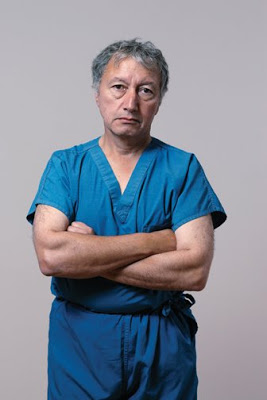 The plaintiffs in the case are the Canadian Medical Association's outspoken past-president and owner of the larger private Cambie Surgery Centre in Vancouver, Dr Brian Day (right); the False Creek Surgical Centre's Anna Stylianides; and Canadian Independent Medical Clinics Association president Zoltan Nagy.